




















How AI Tutors Are Transforming Personalised Learning in Modern Education
Education is undergoing one of the biggest transformations in history, and at the center of this change are AI tutors. In modern education, the traditional one-size-fits-all learning model is no longer enough. Students have different learning speeds, strengths, and challenges—and artificial intelligence is finally making truly personalized learning possible.
From schools and universities to online courses and self-learning apps, AI tutors are reshaping how students learn, practice, and succeed. In 2026, AI-powered tutoring is no longer experimental—it’s becoming essential.
What Are AI Tutors?
AI tutors are intelligent digital learning systems that use artificial intelligence, machine learning, and data analysis to guide students through lessons. Unlike traditional digital content, AI tutors adapt in real time based on a student’s performance, behavior, and learning style.
These systems can:
- Identify strengths and weaknesses
- Adjust lesson difficulty automatically
- Provide instant feedback
- Recommend personalized learning paths
AI tutors act like a personal teacher available 24/7, offering support whenever students need it.
Why Personalized Learning Matters More Than Ever
In traditional classrooms, teachers often struggle to give individual attention to every student. Some learners fall behind, while others move too fast and lose interest. Personalized learning solves this problem by adapting education to each learner’s needs.
AI tutors make personalization scalable. They analyze data such as quiz results, response time, and learning patterns to create a customized experience for every student. This leads to better understanding, higher engagement, and improved academic performance.
How AI Tutors Adapt to Individual Learning Styles
One of the most powerful features of AI tutors is their ability to understand how a student learns best. Some students prefer visuals, others learn through practice, while some need repetition.
AI tutors can:
- Offer videos, diagrams, or text explanations
- Increase practice questions for weak topics
- Slow down or speed up lesson delivery
- Reinforce concepts using different methods
This flexibility ensures that no student feels left behind or overwhelmed.
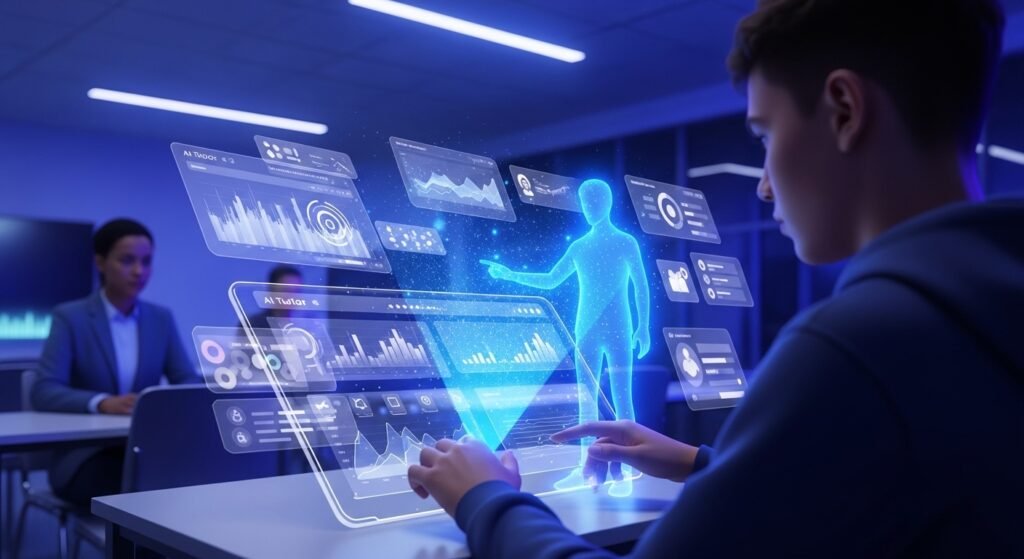
Real-Time Feedback and Instant Support
Unlike traditional homework that may take days to be reviewed, AI tutors provide instant feedback. When a student makes a mistake, the system explains why and offers guidance immediately.
This real-time support:
- Prevents confusion from building up
- Encourages self-correction
- Builds confidence and independence
Students no longer have to wait for classroom sessions to get help—they can learn and improve instantly.
AI Tutors Improve Learning Outcomes
Studies and real-world use cases show that students using AI-powered tutoring systems often perform better academically. Personalized practice helps reinforce weak areas while avoiding unnecessary repetition of mastered topics.
AI also track progress over time, helping students and teachers understand:
- Learning gaps
- Improvement trends
- Skill mastery levels
This data-driven approach leads to smarter learning decisions and better outcomes.
Supporting Teachers, Not Replacing Them
A common misconception is that AI tutors will replace teachers. In reality, AI tutors are designed to support educators, not replace them.
Teachers can use AI insights to:
- Identify struggling students early
- Customize classroom instruction
- Focus on creativity, discussion, and mentorship
By automating repetitive tasks like grading and practice exercises, AI tutors free up teachers’ time for meaningful interaction.
https://viralblogs.net/2026/02/06/ai-tutors-personalized-learning-modern/
AI Tutors in Online and Remote Learning
Online education has grown rapidly, but engagement and consistency remain challenges. AI tutors solve these problems by keeping learners motivated and accountable.
In remote learning environments, AI tutors:
- Guide students step-by-step
- Maintain learning continuity
- Reduce dropout rates
- Provide structure and routine
This makes online education more effective and reliable.
Making Education More Accessible and Inclusive
AI tutors are also playing a major role in improving education accessibility. Students in remote or low-resource areas can access high-quality learning without physical classrooms.
AI-powered platforms can:
- Work offline or with limited internet
- Support multiple languages
- Adapt to special learning needs
This inclusivity helps bridge educational gaps and promote equal learning opportunities worldwide.
AI Tutors and Lifelong Learning
Education no longer ends with school or university. In modern society, lifelong learning is essential—and AI tutors support this shift perfectly.
Professionals use AI tutors to:
- Learn new skills
- Upskill for career growth
- Prepare for exams and certifications
With personalized pacing and flexible schedules, AI tutors make learning compatible with busy lifestyles.
Data Privacy and Ethical Considerations
As AI tutors collect learning data, privacy and ethics are important concerns. Modern education systems are focusing on secure data handling, transparency, and responsible AI usage.
The goal is to ensure that student data is protected while still delivering meaningful personalization. Ethical AI design is becoming a core requirement in educational technology.
The Future of AI Tutors in Education
Looking ahead, AI tutors will become even more advanced. Future systems may include emotional intelligence, voice interaction, and deeper integration with classroom teaching.
As technology evolves, AI tutors will continue to:
- Enhance personalized learning
- Improve educational outcomes
- Support teachers and institutions
- Empower students worldwide
AI-driven education is not a trend—it’s the future.
https://www.unesco.org/en/artificial-intelligence/education
Conclusion
AI tutors are transforming personalized learning in modern education by making learning adaptive, accessible, and student-centered. They provide instant feedback, customized paths, and continuous support that traditional systems struggle to deliver at scale.
In 2026 and beyond, AI tutors will play a vital role in shaping smarter, more inclusive education systems. When used responsibly, they have the power to unlock every learner’s full potential.