






















Why Players Are Choosing “Slow Gaming” Over Competitive Stress in 2026
Gaming culture is changing. For years, the spotlight was on competitive multiplayer titles, ranked ladders, esports pressure, and high-stakes performance. But in 2026, a surprising trend is taking over the industry: slow gaming. Players are increasingly choosing calm, relaxing, low-pressure experiences instead of intense competition.
This shift isn’t accidental. It reflects deeper changes in mental health awareness, lifestyle balance, and how people want to spend their digital time. Slow gaming isn’t about winning — it’s about feeling good while playing.
What Is “Slow Gaming”?
Slow gaming is a design philosophy focused on relaxation, exploration, and enjoyment rather than speed, ranking, or competition. These games encourage players to move at their own pace. There are no timers forcing panic, no toxic chat rooms, and no performance anxiety.
Examples of slow gaming include:
- Cozy life simulators
- Exploration-driven indie games
- Farming and crafting worlds
- Narrative walking adventures
- Creative sandbox environments
The goal is simple: play to unwind, not to compete.
This genre is growing because modern life is already stressful. Players want games that act as a digital escape, not another pressure system.
https://viralblogs.net/2026/01/31/why-players-prefer-slow-gaming-over/
The Burnout from Competitive Gaming
Competitive gaming once symbolized skill and status. But many players now report burnout from constant ranking systems and performance pressure.
Online competitive games often involve:
- Toxic voice chat
- Fear of losing rank
- Constant comparison with others
- Long grinding sessions
- Anxiety over performance
Instead of feeling entertained, players feel judged.
In a world already filled with deadlines, work pressure, and social expectations, gaming started to feel like another job. Slow gaming emerged as a response to that fatigue.
Players began asking:
“Why am I stressed while playing something meant to relax me?”
https://www.apa.org/monitor/2020/04/video-games
Mental Health Awareness Is Changing Player Choices
The global conversation around mental health has influenced gaming habits more than ever. Younger generations especially prioritize emotional well-being and self-care.
Slow games offer:
- Gentle pacing
- Positive feedback loops
- Non-punishing mechanics
- Creative freedom
- Emotional storytelling
These elements reduce stress and promote calm focus. Many players describe slow gaming as a form of interactive meditation.
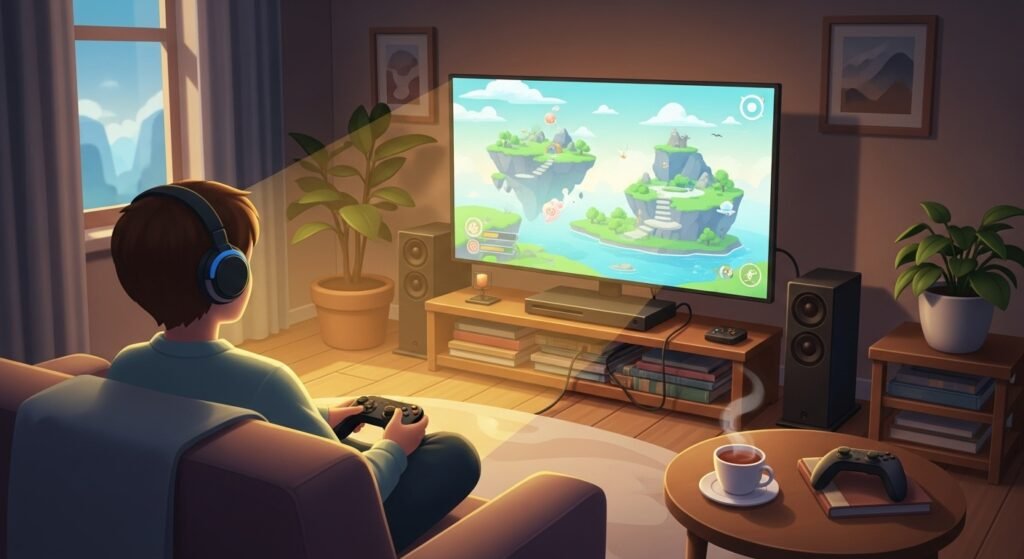
Psychologists note that low-pressure gameplay can help regulate mood and reduce anxiety. Instead of adrenaline spikes, slow games provide emotional stability — something modern players actively seek.
The Rise of Cozy Gaming Communities
Another reason slow gaming is thriving is the community surrounding it. Unlike competitive spaces that can become hostile, cozy gaming communities are often supportive and welcoming.
Players share:
- In-game creations
- Relaxing screenshots
- Story moments
- Design ideas
- Comfort playlists
These communities focus on creativity and expression rather than skill dominance.
The environment encourages players to celebrate personal progress instead of competing against others. This shift from rivalry to collaboration has made slow gaming feel socially safe and inclusive.
Developers Are Designing for Relaxation
Game studios are paying attention. Many developers now intentionally design experiences around comfort and emotional wellness.
Features common in slow gaming design include:
- Soft color palettes
- Gentle soundtracks
- Minimal failure penalties
- Exploration without pressure
- Open-ended gameplay
These design choices signal a shift in industry priorities. Success is no longer measured only by difficulty or competitiveness. It’s measured by player satisfaction and emotional impact.
Some developers even consult psychologists to design calming environments and reward systems that support healthy play patterns.
Why Slow Gaming Fits Modern Lifestyles
Modern life is fast. People multitask constantly, switch between screens, and absorb endless information. Slow gaming offers the opposite: intentional digital quiet.
These games work well for:
- Short relaxation breaks
- Evening wind-down routines
- Stress recovery after work
- Casual weekend play
- Background comfort gaming
Players don’t feel punished for leaving mid-session. There’s no fear of missing out. Progress is flexible and forgiving.
In a productivity-obsessed culture, slow gaming is a small act of rebellion — choosing peace over performance.
The Economics of Calm: Why Slow Games Sell
Interestingly, slow games aren’t just emotionally appealing — they’re financially successful.
Cozy indie titles often:
- Maintain long player retention
- Build loyal fan communities
- Generate positive word-of-mouth
- Encourage repeat purchases
- Inspire merchandise and expansions
Players return because they associate these games with comfort and safety. That emotional attachment creates strong brand loyalty.
The industry has learned that not every hit game needs to be competitive. Sometimes, the most powerful experience is simply feeling at ease.
The Future of Gaming May Be Slower — and Healthier
Slow gaming doesn’t mean competitive games will disappear. Esports and ranked titles still have massive audiences. But the industry is diversifying.
Players are redefining success in gaming:
Not higher rank.
Not faster reflexes.
Not domination.
But relaxation, creativity, and emotional connection.
The future of gaming may include more hybrid designs — games that allow competition without stress, progression without pressure, and challenge without toxicity.
Slow gaming represents a cultural maturity in how we view entertainment. It proves that games don’t need intensity to be meaningful.
Sometimes the most powerful experience is simply a peaceful world you can step into after a long day.
Final Thoughts
The rise of slow gaming is more than a trend — it’s a reflection of how players are protecting their mental space in a fast, demanding world. By choosing calm over competition, gamers are redefining what digital fun looks like.
In 2026, success isn’t just about winning.
It’s about enjoying the journey.
And slow gaming reminds us that play should always feel like a break — not another battle.