



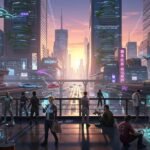


















AI-Generated Game Worlds: How Artificial Intelligence Is Creating Infinite Gaming Universes
The gaming industry has always been driven by innovation, from improved graphics and immersive storytelling to realistic physics and online multiplayer experiences. Now, a new technological revolution is transforming how games are created and played. Artificial intelligence is enabling developers to build AI-generated game worlds, where environments, characters, and missions can be created dynamically.
Instead of manually designing every part of a game map, AI can generate large virtual environments automatically. This allows developers to create massive and sometimes infinite gaming universes that evolve as players explore them.
As artificial intelligence continues to advance, AI-generated worlds could become one of the most important innovations shaping the future of gaming.
Understanding AI-Generated Game Worlds
AI-generated game worlds are environments created or expanded using artificial intelligence algorithms. These systems analyze patterns, rules, and player behavior to generate landscapes, cities, quests, and even characters.
Many modern games already use a technique known as procedural generation, which allows computers to create game elements automatically based on predefined rules.
A well-known example is Minecraft, where entire worlds are generated automatically when players start a new game. Each world is unique and filled with different landscapes, caves, and resources.
More recently, games like No Man’s Sky have pushed this idea even further by creating billions of unique planets that players can explore.
https://unity.com/topics/artificial-intelligence
The Role of Artificial Intelligence in Game Development
Artificial intelligence allows developers to go beyond simple procedural generation. AI can analyze player behavior, learn from gameplay patterns, and create dynamic experiences that adapt over time.
Game development engines such as Unreal Engine and Unity are increasingly integrating AI tools to assist developers in creating smarter environments.
These AI systems can generate:
- Landscapes and terrains
- Cities and buildings
- Non-player characters (NPCs)
- Dynamic quests and missions
- Environmental events and challenges
By automating these tasks, developers can focus more on storytelling and gameplay innovation.
Creating Infinite Gaming Universes
One of the most exciting aspects of AI-generated worlds is the possibility of infinite gameplay environments. Because AI can generate content continuously, players may never run out of new places to explore.
Instead of static maps that remain the same for every player, AI systems can create unique worlds tailored to individual experiences.
For example, an AI-driven game could generate:
- New regions every time a player travels far enough
- Unique missions based on player decisions
- Dynamic ecosystems with evolving wildlife
- Changing weather systems and natural disasters
These features make game worlds feel alive and constantly evolving.
https://viralblogs.net/2026/03/31/ai-generated-game-worlds/
Personalized Gaming Experiences
Artificial intelligence can also personalize gameplay based on player preferences and behavior.
By analyzing how players interact with the game, AI systems can adjust the environment to match the player’s style. For example:
- Exploration-focused players may receive larger maps and discovery-based missions
- Combat-focused players may encounter more enemies and strategic battles
- Story-driven players may experience more narrative events
This level of personalization can make games feel more engaging and immersive.
Reducing Development Time
Game development often requires large teams and long production timelines. Designing massive open-world environments manually can take years.
AI tools help reduce development time by automatically generating parts of the game world.
Developers can create frameworks and rules, while AI systems generate detailed environments based on those rules. This allows studios to build larger and more complex games without dramatically increasing development costs.
For independent developers and smaller studios, AI-powered tools can make it easier to compete with larger companies.
Dynamic Storytelling and Quests
AI-generated worlds can also improve storytelling by creating dynamic quests that adapt to player actions.
Instead of repeating the same scripted missions, AI systems can generate new storylines and challenges in real time.
For example, an AI system could:
- Generate unique quests based on the player’s location
- Create NPC characters with evolving personalities
- Develop new story events triggered by player decisions
This approach makes gameplay more unpredictable and exciting.
Challenges of AI-Generated Worlds
Although AI-generated game worlds offer many advantages, there are also several challenges.
One challenge is maintaining quality and consistency. Automatically generated content must still meet the design standards expected by players.
Another challenge is balancing randomness with meaningful gameplay. If AI-generated environments are too random, they may feel repetitive or lack purpose.
Game developers must carefully design AI systems to ensure that generated worlds remain engaging and well-structured.
The Future of AI in Gaming
Artificial intelligence is expected to play an even larger role in the gaming industry in the coming years. Future AI systems may be capable of generating entire storylines, characters, and environments without direct human design.
Games could become more interactive, adaptive, and immersive as AI systems learn from player behavior.
Some experts believe that AI may eventually allow players to explore truly limitless gaming universes, where every experience is unique.
This technology could also enable smaller studios to create large-scale games that were previously possible only for major game developers.
Conclusion
AI-generated game worlds represent an exciting evolution in the gaming industry. By using artificial intelligence to create environments, quests, and characters dynamically, developers can build massive and ever-changing virtual universes.
From procedural generation to personalized gameplay experiences, AI is opening new possibilities for how games are designed and played.
As AI technology continues to advance, the future of gaming may include worlds that are not only vast but truly infinite, offering players endless opportunities for exploration and adventure.